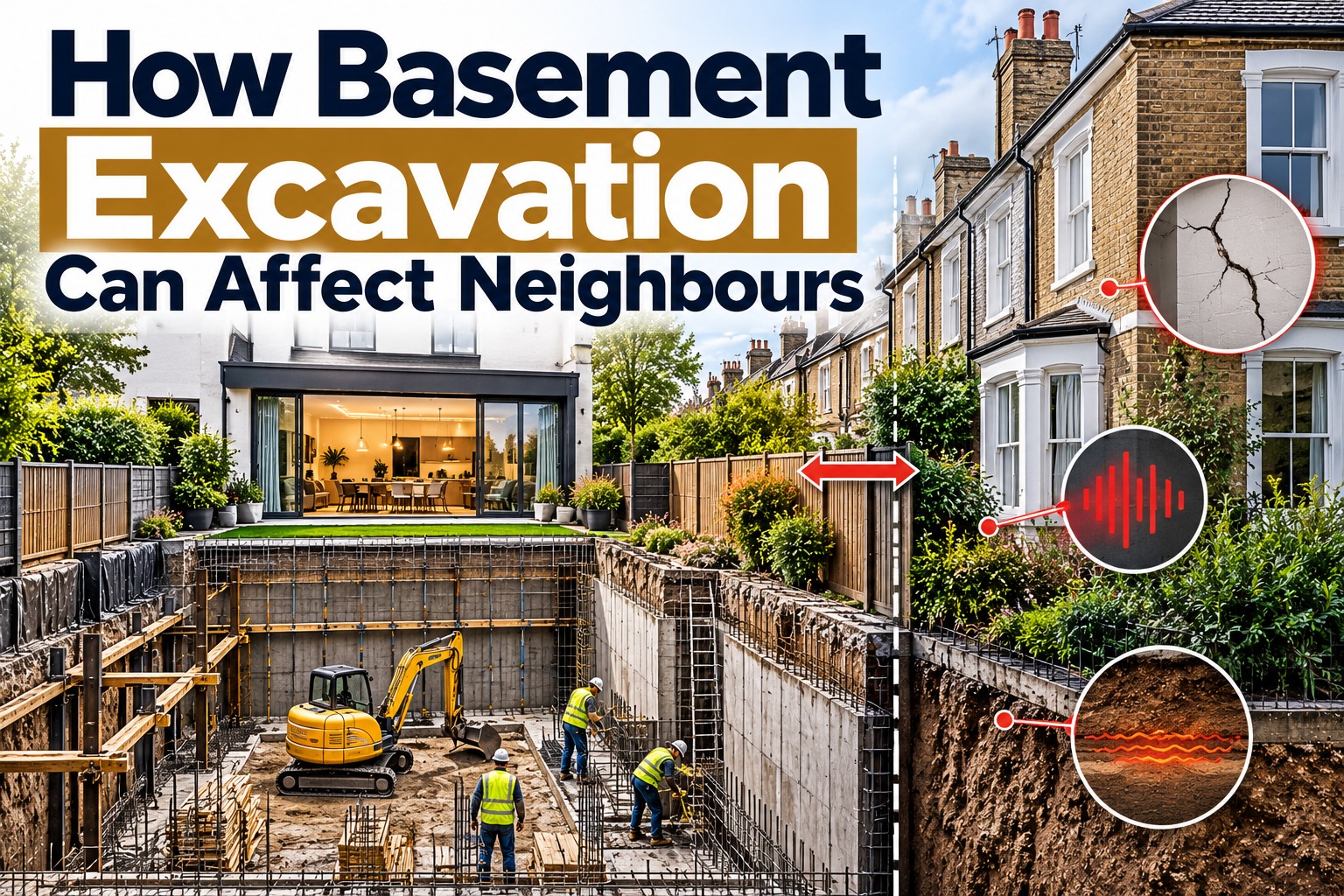

Cut and cover (basement construction) is the most popular form of basement construction in the UK). It’s best for new build properties; Or Homes with large outdoor spaces. This technique permits builders to fully dig up the ground, build the basement and then finish off by covering it so you have a tidy finished basement underneath your home.
What is Cut and Cover?
Cut and cover is the method of digging a large open pit to create the basement walls and floor slab from below grade. After the structural skin is finished, dirt is backfilled into the basement, and construction or renovation of a building can begin. There is great access for construction with this approach, and it can be cost-effective on the right job site.
When Cut and Cover Is Used
It is a favourite method for new builds, house extensions and where there is rear or side garden space. It is less fitting for densely populated urban zones with limited accessibility or adjacent high flying buildings. In the UK cut-and-cover is frequently used for suburban and large domestic buildings.
Step by Step Construction Process
Work on the Site and Excavation The first step is to prepare the land in which the road will be developed. The ground is dug out to the depths of the proposed basement with stable side walls or shoring provided. The foundation is cast in place and the base slab consists of a reinforced concrete lid. Basement walls can be reinforced concrete or masonry, both according to design. Once the building envelope is closed, various weathering systems sub-systems must be applied to prevent water infiltration. Ultimately, the disturbed earth is replaced around the structure and the surface above it restored.
Waterproofing and Drainage Considerations
It is necessary to ensure a correct watertightness for the cut and cover method. Foundation wall waterproofing is achieved by the use of an exterior damp-proof coating or membrane which can be supplemented with the installation of a perimeter drain system to direct groundwater away from the foundation. These initiatives prevent long term damage and meet you with UK building regulations.
Benefits of Cut and Cover Method
Ease of implementation is one of the major advantages of this approach. “Open excavation is faster and gives better quality control in building. It is generally less expensive than more complex underpinning techniques, and allows a basement to be constructed cost effectively even when the design calls for a deep one.
Limitations and Challenges
The biggest drawback of cut and cover is the space requirement. Basement excavation may be very perturbing and entails careful maintenance of soil solidity. It may also require planning permission, depending on the scale of the work and local authority policy.
Is Cut and Cover Right for Your Project?
Cut and cover is suitable where the land along the line of excavation is relatively free to use with a simple chain of title. It is necessary to have a professional assessment of the suitability on soil type, water table and site restrictions.
For sound advice and professional execution, experienced professionals who provide home owners with basement construction contractors in Chiswick can make sure the cut and cover process is done in a safe, effective manner that meets all regulations.