
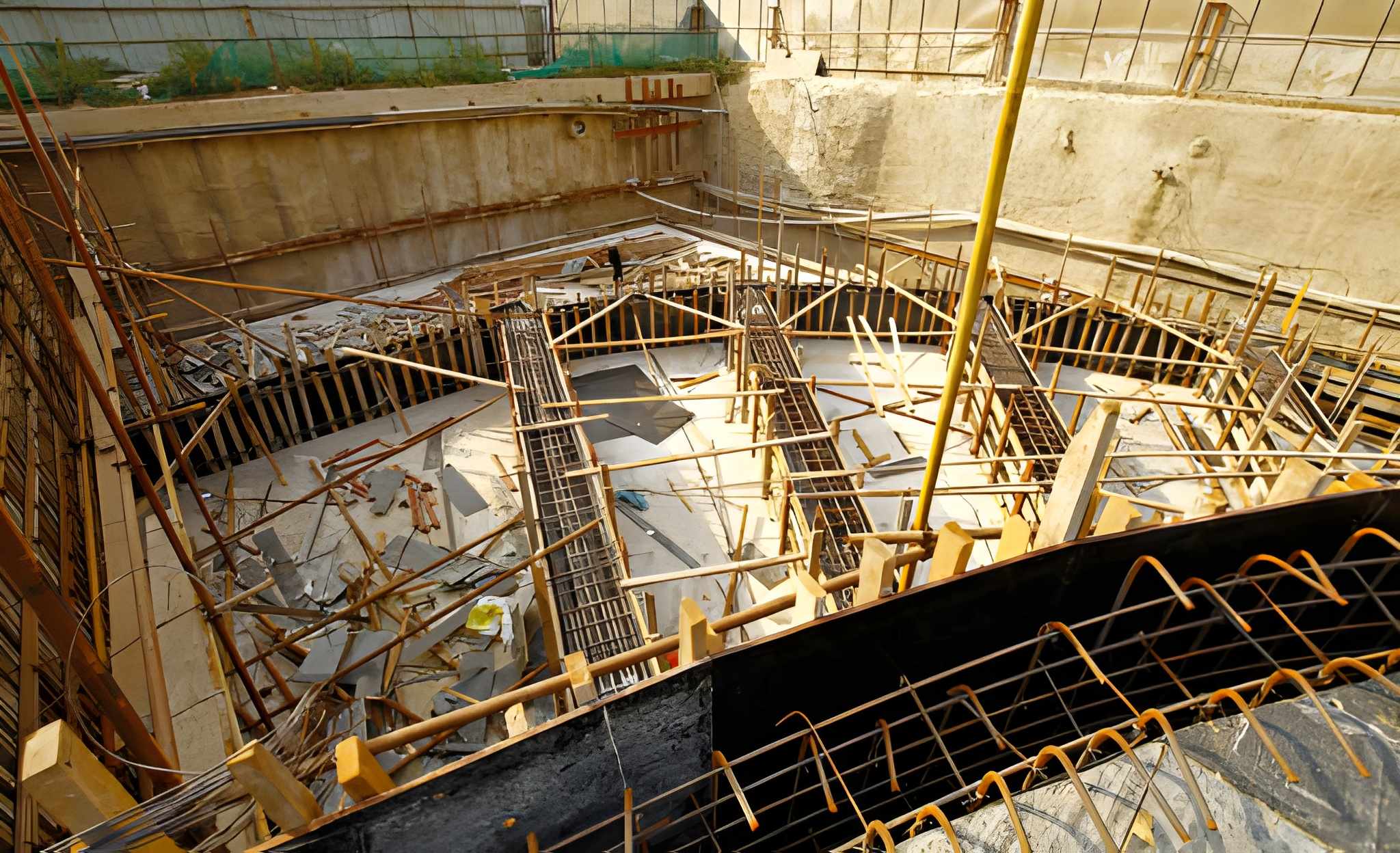
Deep basement excavation is a challenging construction process which enables the building owners to develop extensive underground space without increasing the footprint of the structure. In the United Kingdom this form of building is particularly popular in relatively high-value, urban areas with limited land for new buildings. A systematic procedure is necessary for the safe, compliant and long lasting performance.
Preliminary Feasibility Study and Site Survey
The process starts with a thorough feasibility analysis. This would include soil tests, groundwater studies and looking at structures on the current building and its adjacent properties. Engineers evaluate whether the earth can handle such a deep hole, looking for problems like high water tables or weak soil layers. This step will set the attainable depth and general response strategy.
Design Development and Structural Engineering
Architects and structural engineers produce detailed drawings and calculations once feasibility has been established. The design includes excavation methods, retaining structures, underpinning techniques and load transfer systems. Design of temporary works is also drawn up to maintain the stability-of the building and adjacent areas during construction.
Planning Permission and Approvals
The construction of deep basements frequently needs planning permission, especially in London. Basement impact studies might be necessary to prove minimal effect on adjacent buildings. It is also required to confirm the woodshop meets all fire codes, safety regulations and structural requirements.
Excavation and Temporary Support Works
Calm is secured through staged excavation. Temporary surfaces (such as steel frames) are installed on which to stand whilst the excavation progresses. This staged approach minimizes mobilization and preserves surrounding structures.
Underpinning and Permanent Structural Works
Underpin both underpins are being strengthened to support the increased basement depth. Depending on site conditions, method can be mass concrete, beam and base systems or mini piling. After underpinning, permanent RC walls and slabs are maintained.
Waterproofing and Drainage Installation
Basement waterproofing is a necessity for very deep basements in the UK. They generally comprise cavity drain membranes, sump pumps and perimeter drainage channels. They block out water and give long life in wet ground.
Internal Fit-Out & M&E Services
Once the structural shell is finished up go insulation, ventilation, heating, electrical and interior finishes. At this stage all fire safety methods such as exits and alarms must be added to comply with building codes.
Final Inspection and Completion
Stage three is compliance with the approved plans and inspections by building control officers. Once signed off on, the basement can then be used for storage or as a fully liveable area.
For homeowners in the UK aspiring to reach new depths, there’s a range of deep expertise available from specialists providing basement construction services in UK – where every step of subterranean construction and basement depth extensions is managed with professionalism and safe completion according to the stringent guidelines.