
Project Overview
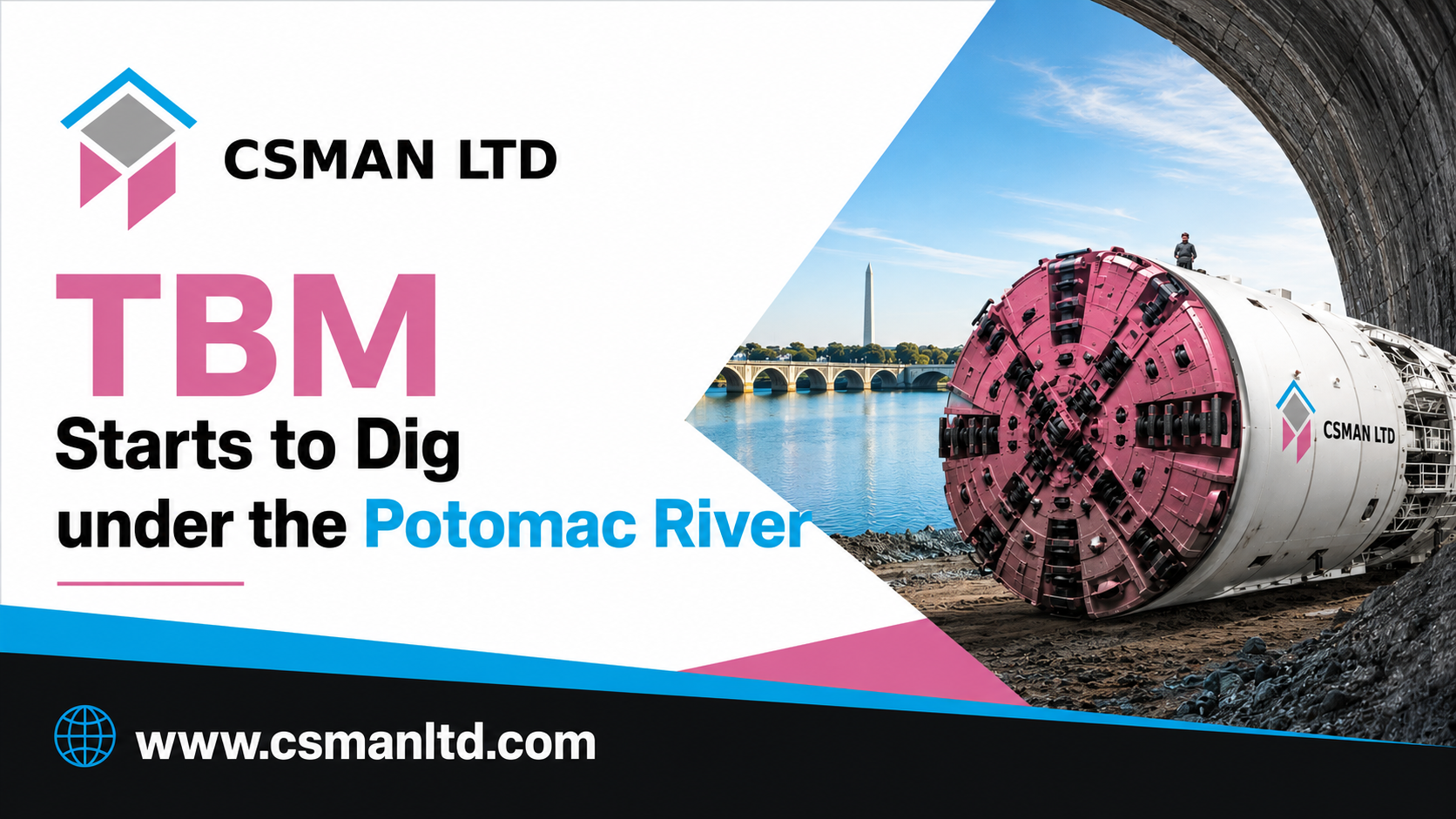
One of the biggest strides has been made in the Potomac River infrastructure development through the introduction of a tunnel boring machine called Mary. The machine has started to excavate an underground sewer tunnel of 8.8km under Washington DC as part of a long-term solution to better manage the wastewater, and minimize the effects on the environment.
The manner in which Tunnel Boring Process is done.
Gantries are attached to the machine one behind the other as the machine moves forward to create a continuous working machine within the tunnel. These systems aid in power, ventilation, transport of materials, and secure access of workers.
When complete, the machine will be approximately 1,200 tonnes, more than 200 metres long, and make a tunnel 6.4 metres in diameter. The rotating cutterhead bores the ground with crews placing precast concrete segments to create the tunnel lining.
Engineering Preparation and Launch
Contractors erected some of the main enabling works prior to the commencement of excavation and this included the construction of a 30-metre-deep shaft and starter tunnel. The front part of the machine was assembled in this space.
In the launch stage, a concrete tunnel ring was the first to be installed and attached to a thrust system, which would enable hydraulic jacks to push the machine forward and start excavation.
Alignment and Future Progress in Tunnels
The machine will proceed north of the West Potomac Park to the Georgetown University, cutting through thick bedrock. The other machine, Emily will dig in the opposite direction, thus completing the entire tunnel system.
Environmental Impact and Significance of the project
The proposed project belongs to a larger program to decrease sewage overflow into the Potomac River considerably. The development will be completed by 2030 and it will be led by a joint venture between CBNA and Halmar International.
To get more information about the project read the entire article here:
Another Construction Way
The use of Engineering Principles in all Projects.
We know that the principles of engineering applied in big infrastructure projects are also applicable at CSMANLTD in smaller construction projects. Success in the project, be it major tunnelling or residential and commercial developments, relies on thorough planning, ground evaluation and accurate implementation.
We have had experience in below ground structures such as basements and deep foundations which guarantee stability and long-term performance. Our temporary works design and implementation help to enable safe excavations, whereas our knowledge of groundworks can enable an efficient site preparation. Moreover, our waterproofing products keep buildings dry and prevent their long-term damages.
We practice the same approach and maintain the same level of technical discipline so that all projects, big or small, are executed at the same standard of quality, safety and attention to detail.