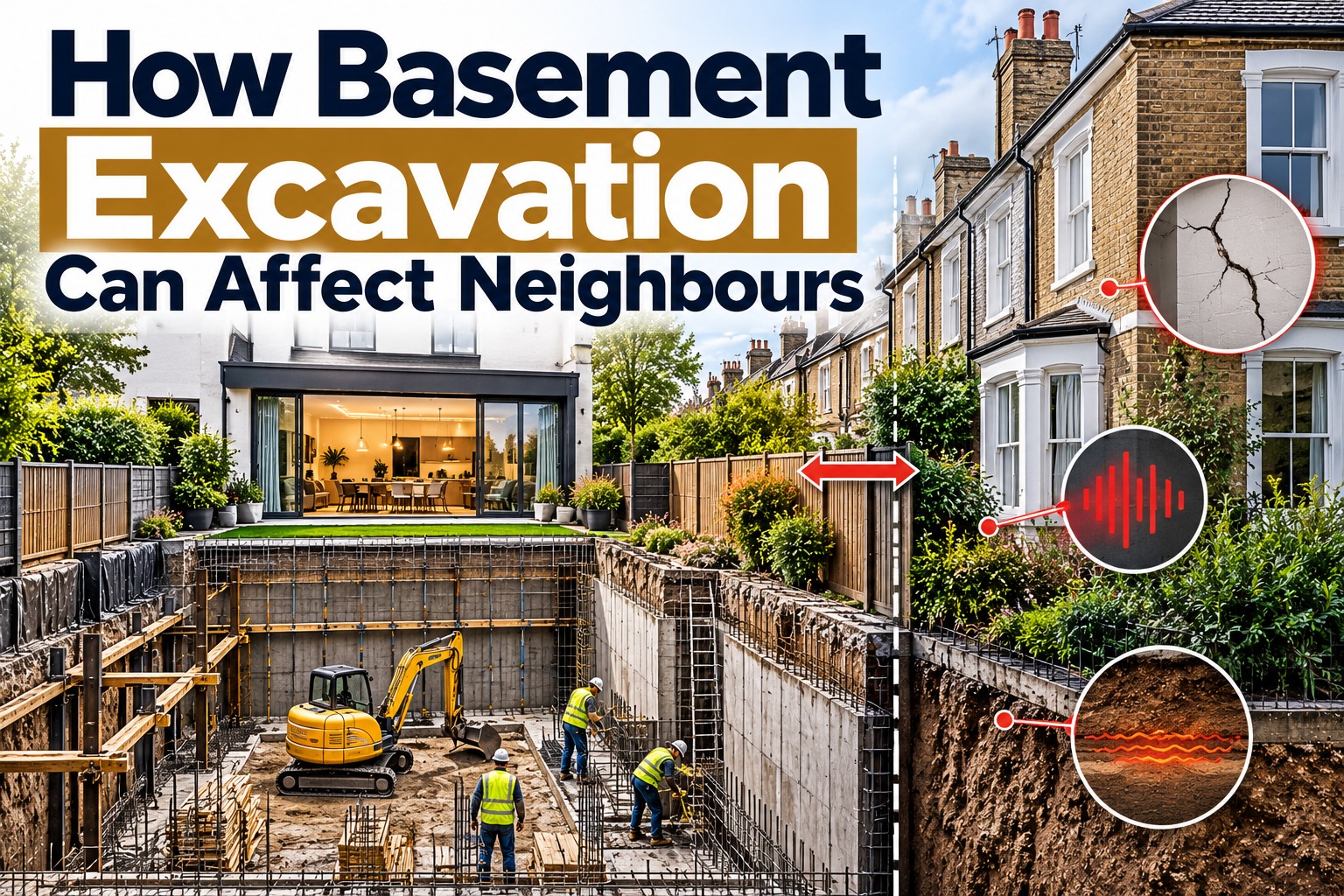

The introduction of the Building Safety Act 2022 marks a significant shift in the UK construction landscape, particularly for complex projects such as basement construction and underground services. These projects often involve deep excavation, structural engineering challenges, and integrated systems below ground level, which makes them subject to greater scrutiny and accountability.
Where basement construction was previously guided by technical standards and industry best practices, it is now governed by a stronger legal framework. This framework places responsibility not only on contractors and designers but also on clients, ensuring that every stage of a project meets clearly defined safety and competence requirements.
A Higher Standard of Responsibility in Basement Construction
Basement construction presents a unique set of challenges, including soil stability, structural load management, and confined working environments. These complexities increase the level of risk and require a high degree of precision from the earliest design stages through to completion.
The Building Safety Act strengthens these expectations by introducing a clear legal obligation for competence. This approach builds upon the principles established by the Construction (Design and Management) Regulations 2015, while placing greater emphasis on accountability and proven expertise.
Clients must ensure that only qualified professionals are appointed. Contractors must demonstrate their capability through experience, skills, and adherence to safety standards. In basement construction, this shift highlights the importance of specialist knowledge and disciplined execution.
Waterproofing and Structural Integrity in a Compliance Driven Environment
Waterproofing is one of the most critical elements in basement construction, directly affecting durability and usability of below ground spaces. Its role goes beyond preventing water ingress and plays a key part in maintaining structural integrity and occupant safety.
If waterproofing systems are not properly designed or installed, the consequences can include damp conditions, mould growth, and gradual structural damage. These issues can lead to expensive repairs and long term risks.
Although the Building Safety Act does not specifically isolate waterproofing, its requirement for safe and habitable buildings places strong importance on this area. This aligns with the obligations under the Defective Premises Act 1972, which reinforces the need for buildings to remain suitable for occupation over time.
In modern basement construction, waterproofing must be treated as an integrated system. This is especially important when coordinating with underground services such as drainage, electrical systems, and ventilation, where failure in one element can impact the entire structure.
Increased Oversight and Regulatory Control
A major development under the Building Safety Act is the expansion of regulatory oversight through the Building Safety Regulator, operating within the Health and Safety Executive.
This regulatory body has enhanced authority to monitor construction activities and enforce compliance with safety standards. Its role focuses on ensuring that safety is integrated into every stage of a project.
For basement construction and underground services, this means that excavation, temporary works, structural systems, and service installations must all meet clearly defined safety expectations. This structured approach improves transparency and reduces the risk of errors.
The Evolving Role of Underground Services
Underground services are a key component of modern basement construction. They support the functionality and efficiency of buildings through systems such as drainage, electrical infrastructure, and ventilation.
The Building Safety Act reinforces the need for these systems to be handled by qualified professionals. It is no longer enough for services to function effectively. They must also meet compliance standards and integrate with the overall safety framework of the building.
This shift encourages better coordination between engineers, designers, and contractors, resulting in more reliable and durable construction outcomes.
A New Standard for Construction Excellence
The introduction of the Building Safety Act 2022 represents a long term transformation in how construction quality is defined. Safety, accountability, and competence are now central to every successful project.
For CSMANLTD, this change highlights the importance of delivering high quality basement construction and underground services while maintaining full compliance with regulations. By focusing on expertise and precision, projects can achieve both safety and long term performance.
Conclusion: Raising Standards in Basement Construction and Underground Services
The Building Safety Act is reshaping the construction industry by placing greater emphasis on safety, accountability, and competence, particularly in areas such as basement construction and underground services.
As regulatory expectations continue to evolve, the success of any project depends on combining technical expertise with strict compliance. This shift is raising standards across the industry and ensuring that buildings are safe, durable, and suitable for long term use.
For clients and developers, working with experienced professionals like CSMANLTD is essential. In this new environment, quality and compliance work together to create stronger and more reliable construction outcomes.