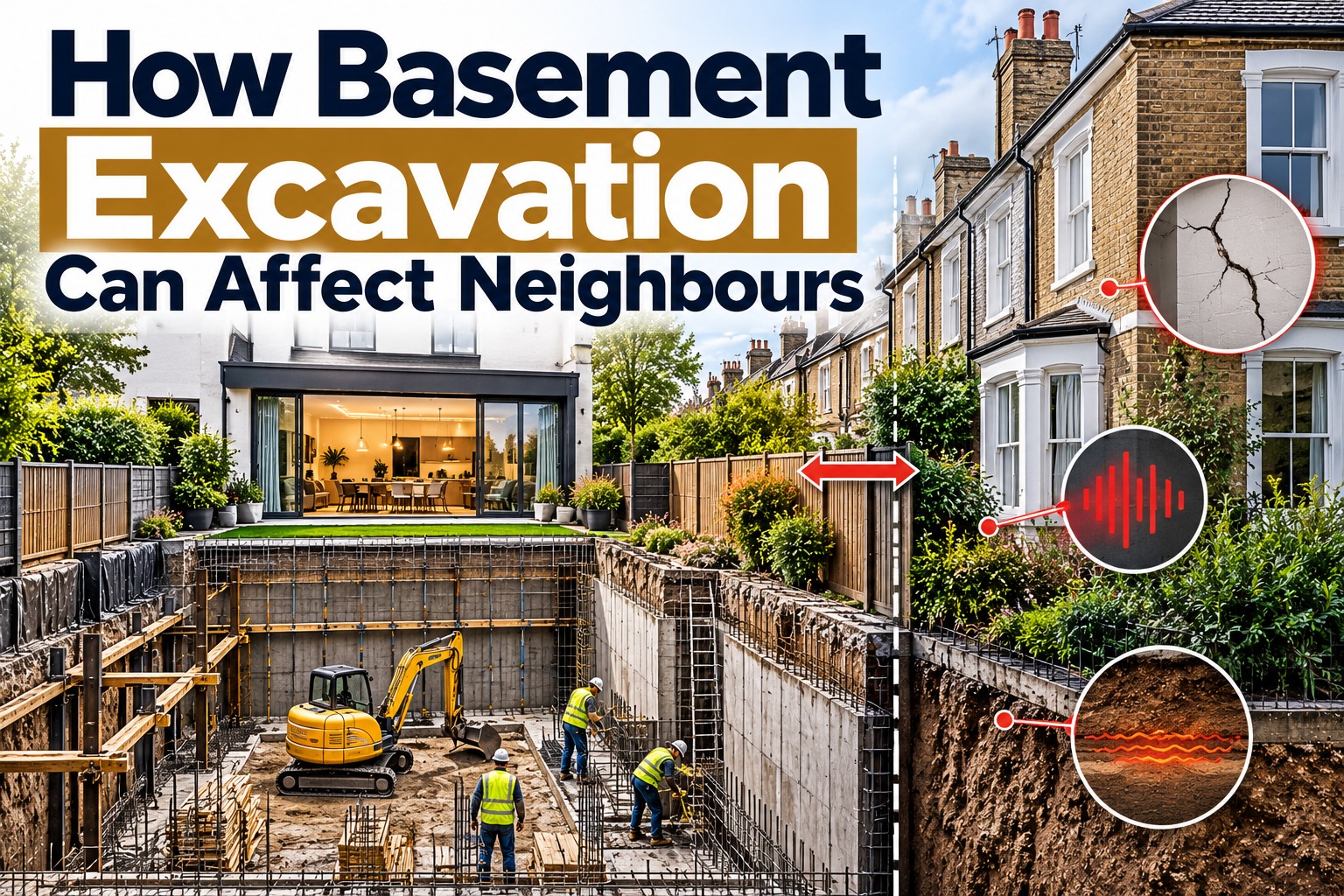

Basement excavation is one of the most critical phases of any basement project. If you are planning Basement Construction in Barnet, understanding how excavation works will help you make informed decisions, reduce risks, and ensure long-term structural stability. The soil conditions, property type, and local regulations in Barnet make proper excavation planning essential.
This guide explains why basement excavation matters, when it is required, what techniques are used, and how safety is maintained throughout the process.
Why Basement Excavation Is Important
Basement excavation is the foundation of your entire structure. Without precise digging and preparation, even the best design can fail.
For homeowners considering Basement Construction in Barnet, excavation ensures:
- Proper structural support for the new basement
- Protection of the existing building foundation
- Safe soil removal without damaging neighboring properties
- Compliance with local building regulations
- Adequate drainage and waterproofing preparation
Barnet has a mix of clay-based soils and residential properties built close together. This makes controlled excavation essential to prevent ground movement or structural impact to adjoining homes.
When Is Basement Excavation Required?
Not every basement project requires full-scale excavation. The need depends on the current property structure and the desired outcome.
You typically require excavation when:
- Rebuilding a crawl area into a structurally sound full-depth basement
- Lowering an existing basement floor to increase ceiling height
- Building a completely new basement under an existing house
- Extending a basement beneath a garden or driveway
- Adding a multi-level basement
In Barnet, many properties are Victorian or mid-twentieth-century homes with limited foundation depth. When planning Basement Construction in Barnet, excavation often involves underpinning to safely support the existing structure while soil is removed beneath it.
Common Basement Excavation Techniques
Underpinning
Why choose underpinning: It supports the original structure during excavation and prevents settlement issues.
When it is used: When lowering an existing basement floor or creating a new basement beneath an existing house.
Top-Down Construction
Why it is beneficial: It provides immediate structural stability and reduces movement in surrounding soil.
When it is suitable: For properties with limited external access or tight urban spaces common in Barnet.
Open-Cut Excavation
Why it is efficient: It allows faster excavation and easier equipment access.
When it works best: For new builds or properties with large garden areas where space is available.
Piled Wall Systems
Why it increases safety: It stabilizes the surrounding soil and protects neighboring buildings.
When it is required: In areas with unstable soil or close proximity to adjacent structures.
Tools Used in Basement Excavation
Modern Basement Construction in Barnet relies on a combination of heavy machinery and precision tools.
- Excavators – used to remove large volumes of soil quickly; mini excavators are common due to narrow access roads.
- Hydraulic breakers – help remove concrete and hard surfaces.
- Soil removal equipment – such as conveyors and grab lorries transport materials safely off-site.
- Surveying tools – including laser levels ensure accurate depth and alignment.
- Temporary support systems – such as props and braces maintain structural safety during digging.
Each tool plays a role in maintaining efficiency while minimizing disruption to surrounding properties.
Why Safety Is Critical During Excavation
Excavation carries structural and environmental risks. Without proper planning, it can lead to foundation collapse, water ingress, or damage to nearby buildings.
Safety matters because:
- It protects workers on site
- It safeguards neighboring homes
- It prevents soil collapse
- It ensures compliance with UK construction standards
- It reduces legal and financial risks
For Basement Construction in Barnet, contractors must follow strict safety guidelines. These include regular structural monitoring, soil stability assessments, and temporary structural supports during underpinning.
When Waterproofing and Drainage Planning Begins
Excavation is not only about digging—it’s the stage where drainage and waterproofing preparation begins.
Why early planning matters: Basements are below ground level and naturally prone to moisture.
When waterproofing is installed: Typically immediately after excavation and before internal finishing begins.
Proper drainage systems, sump pumps, and membrane installations are integrated at this stage to ensure long-term durability.
Why Professional Expertise Is Essential in Barnet
Barnet properties often have shared walls, restricted access, and planning considerations. Excavation in such environments requires technical knowledge and experience.
A professional contractor understands:
- Local soil composition
- Planning permissions and party wall agreements
- Structural calculations
- Noise and environmental control requirements
Choosing experienced specialists ensures your Basement Construction in Barnet proceeds smoothly, safely, and within regulatory guidelines.