
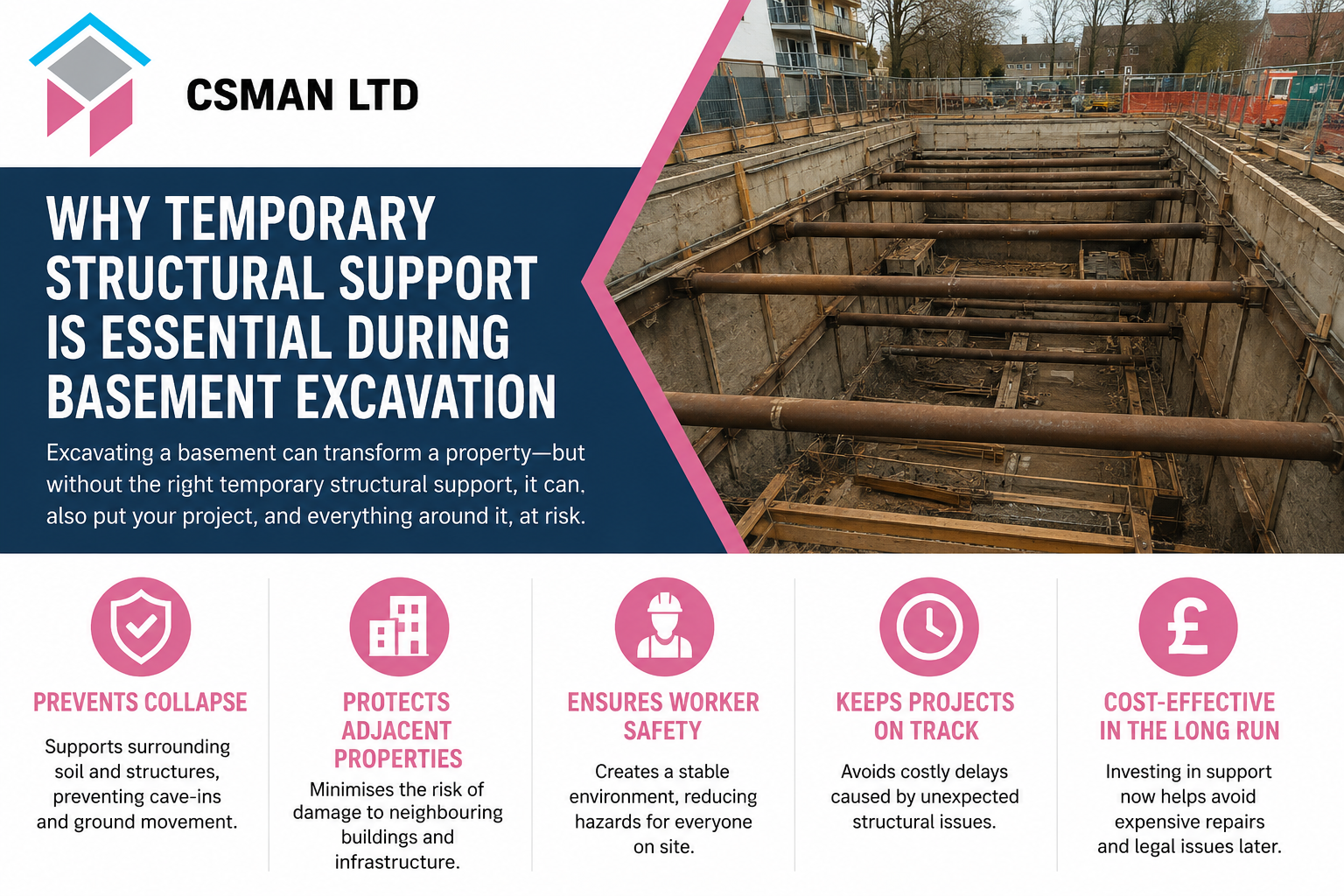
Basement excavation allows homeowners to create valuable additional living space without extending the property’s footprint. However, excavating beneath or alongside an existing structure presents significant engineering challenges. One of the most important safety measures during this process is the installation of temporary structural support.
For homeowners across Greater London, including Westminster, Kensington and Chelsea, Barnet, Harrow, Brent, Wembley, and Wimbledon, understanding the role of temporary support systems can help provide confidence that their property remains safe throughout the construction process.
What Is Temporary Structural Support?
Temporary structural support is an engineered system designed to hold and stabilise a building while excavation work is carried out beneath or around its foundations.
During basement construction, portions of the soil that support the property’s foundations may need to be removed. Without adequate support, there is a risk of structural movement, settlement, or damage. Temporary support systems transfer building loads safely until permanent foundations and structural elements are completed.
Why Is Structural Support Necessary During Basement Excavation?
Protecting Your Home’s Structural Integrity
A property’s foundations are designed to distribute the weight of the building safely into the ground. When excavation takes place, these support conditions change.
Temporary structural support helps ensure that:
- Existing walls remain stable
- Floors stay level
- Load-bearing elements continue to function safely
- Structural movement is minimised
This protects the long-term integrity of the property throughout construction.
Preventing Cracks and Settlement
One of the biggest concerns homeowners have during basement construction is the possibility of cracks appearing in walls or ceilings.
While some minor cosmetic movement can occasionally occur during major construction projects, professionally designed support systems help reduce the risk of excessive settlement and structural damage.
Regular monitoring throughout the project allows contractors and engineers to identify and address potential issues before they become significant concerns.
Protecting Neighbouring Properties
Many London homes are attached, semi-detached, or located close to neighbouring buildings. Basement excavation can affect surrounding ground conditions if not managed correctly.
Experienced basement contractors work alongside structural engineers to design support systems that help protect both the client’s property and neighbouring homes throughout the construction process.
This is particularly important in densely populated areas where buildings often share walls and foundations.
How Do Basement Contractors Determine the Right Support System?
There is no one-size-fits-all solution.
Before excavation begins, professional contractors typically undertake:
- Structural surveys
- Ground investigations
- Foundation assessments
- Engineering calculations
- Neighbouring property evaluations
The chosen support method depends on factors such as:
- Property age
- Existing foundation depth
- Soil conditions
- Basement design
- Proximity to neighbouring structures
Every support system should be designed specifically for the property rather than using a standard approach.
Common Temporary Structural Support Methods
Depending on the project requirements, engineers may recommend:
Underpinning
A method used to strengthen and deepen existing foundations while maintaining support throughout excavation.
Steel Needle Beams
Temporary steel beams transfer building loads safely while foundation work is carried out.
Shoring Systems
Shoring provides temporary support to walls and excavation areas, helping maintain stability during construction.
Retaining Structures
These systems help manage soil pressure and maintain excavation safety until permanent structures are installed.
Why Homeowners Should Choose Experienced Basement Contractors
Temporary structural support is not simply a construction task—it is a critical engineering process that directly affects the safety of the property.
Experienced basement contractors provide:
- Detailed planning and risk assessments
- Collaboration with qualified structural engineers
- Continuous structural monitoring
- Compliance with building regulations
- Protection for neighbouring properties
- Safe and controlled excavation procedures
This expertise helps ensure the project progresses safely while minimising disruption and risk.
Questions Homeowners Should Ask Before Basement Excavation
Before appointing a contractor, consider asking:
- How will the structure be supported during excavation?
- Will a structural engineer be involved?
- What monitoring systems will be used?
- How will neighbouring properties be protected?
- What contingency plans are in place if movement is detected?
A reputable contractor should be able to answer these questions clearly and provide evidence of previous basement construction experience.
Final Thoughts
Temporary structural support is one of the most important elements of any basement excavation project. While it may not be visible once construction is complete, it plays a crucial role in protecting your home, maintaining structural stability, and ensuring the safety of everyone involved.
By working with experienced basement contractors and qualified structural engineers, homeowners can move forward with confidence, knowing their basement project is being built on a safe and professionally managed foundation.