
Concrete delivery planning can become a major logistical challenge when a basement sits several metres below ground level. Unlike a ground floor pour, the operation may require concrete to travel through restricted access routes, reach a deep excavation and be placed within a carefully coordinated construction sequence.
For projects involving Basement Construction in Barnet, delivery arrangements need to work alongside the structural design, available site space and the planned timing of each pour. Poor coordination can lead to delays, interrupted placement and additional pressure on the construction team.
Why Deep Basement Concrete Deliveries Need Careful Planning
A deep basement site may have limited room for concrete mixer trucks, pumping equipment and the movement of other construction vehicles. Existing buildings, narrow entrances and neighbouring properties can further restrict where equipment can be positioned.
The delivery plan should establish how concrete will reach the required location before the pour is scheduled. This includes checking vehicle access, the proposed pump position, the distance to the pouring area and the space needed for safe equipment operation.
The arrangement must also account for other activities taking place on site. If reinforcement inspections, formwork preparation or other structural work remain incomplete, a delivery booked too early can create unnecessary disruption.
Choosing a Suitable Concrete Placement Method
The depth and layout of the basement influence how concrete can be placed. Depending on the project, concrete may be delivered using a pump, a suitable placing boom or another method specified for the operation.
Pump selection should consider the vertical lift, horizontal delivery distance, concrete specification and the equipment manufacturer's operating limits. The site team must also establish whether the equipment can be positioned securely without obstructing essential access.
A method that works for a shallow foundation may not be appropriate for a deeper basement or a large reinforced concrete pour. The placement arrangement should therefore be agreed with the relevant technical team before delivery dates are confirmed.
Coordinating Delivery Times With Site Readiness
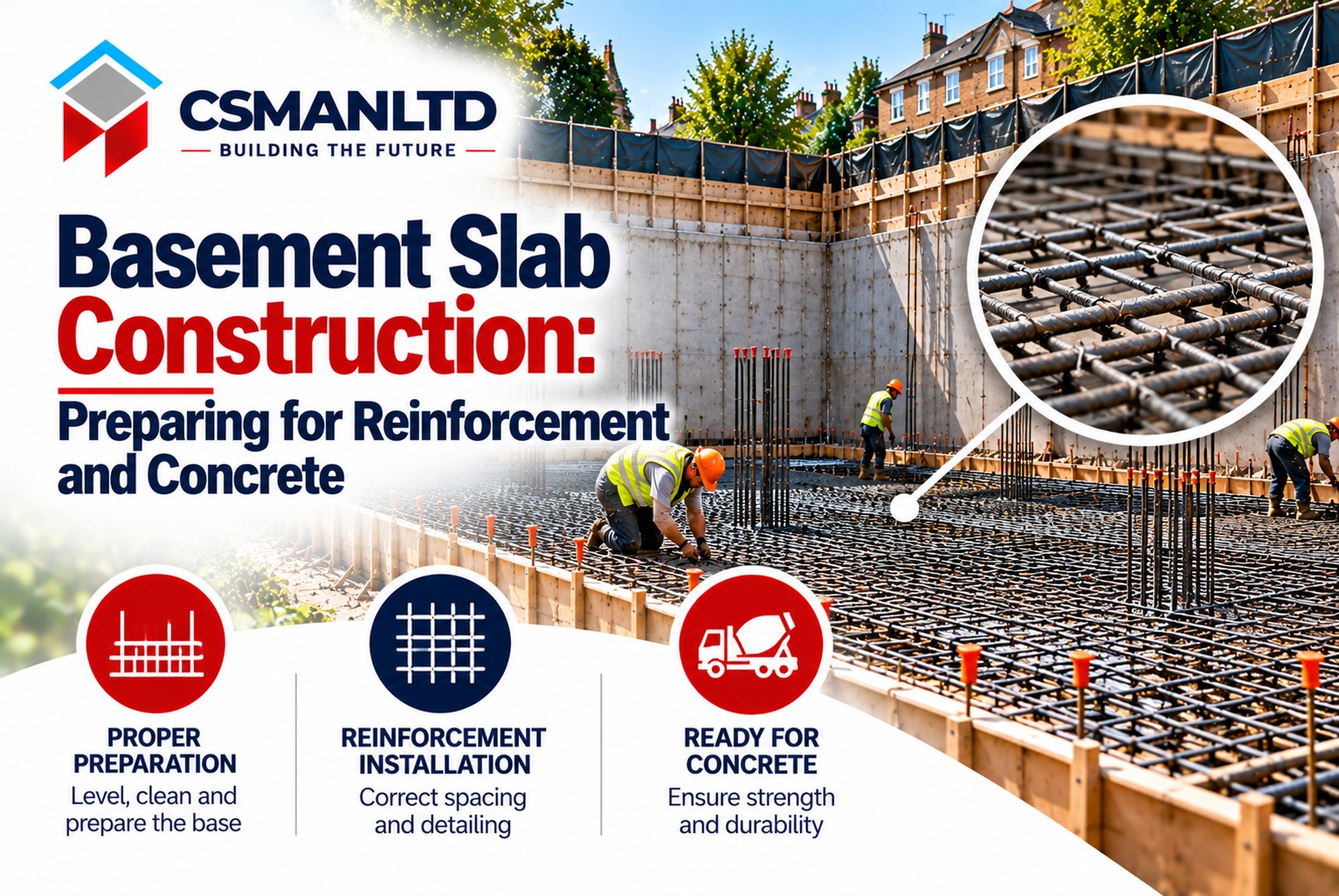
Concrete deliveries need to match the readiness of the structure receiving the concrete. Before a pour begins, the responsible team should confirm that the relevant formwork, reinforcement, embedded items and access arrangements have been checked in accordance with the project requirements.
The delivery schedule should allow for realistic travel times and possible traffic delays. This is particularly important where several loads are needed to complete one continuous pour.
If the first load arrives before the site is ready, waiting time may increase. If subsequent loads arrive too far apart, the placing team may struggle to maintain the intended sequence. The schedule should balance the required pouring rate with the practical capacity of the site and equipment.
Managing Concrete Quality During Placement
Concrete must arrive and be placed within the requirements of its specification. Extended waiting, unsuitable handling or delays during discharge can affect the operation and may create quality concerns.
The site team should coordinate delivery tickets, specified concrete properties and any required checks. Where testing is specified, it should be arranged as part of the pour procedure rather than left until the operation is underway.
Concrete should not be altered on site without authorisation under the applicable quality procedures. If a load arrives late or its condition raises concerns, the responsible personnel should assess it before use.
For larger pours, the team should also understand how the planned delivery rate relates to the time available for placing and finishing the concrete.
Planning for Interrupted Deliveries
Traffic congestion, equipment problems or unexpected site restrictions can disrupt a delivery schedule. Deep basement projects should have a clear process for communicating delays and deciding what action is appropriate.
The response depends on the structural element being poured and the approved construction details. If an interruption could affect the continuity of the pour, the site team should consult the responsible engineer rather than improvising a construction joint or changing the sequence.
This is especially important for structural slabs, retaining walls and other elements where the location and treatment of construction joints need to follow the design.
Keeping the Site Accessible During Concrete Work
Concrete operations can occupy a significant proportion of the available working area. Pump outriggers, delivery vehicles, hoses and temporary barriers may restrict access to other parts of the property.
Before the pour, the site team should identify vehicle routes, pedestrian arrangements, equipment positions and the space needed for other essential activities. Deliveries should be coordinated to reduce conflicts with spoil removal, reinforcement deliveries and ongoing structural work.
Where access is limited, the schedule may need to concentrate concrete operations within a defined period. The arrangement must remain compatible with safe working practices and the equipment manufacturer's requirements.
Concrete Delivery Planning for Basement Construction in Barnet
A reliable concrete delivery plan connects the structural design with the realities of working on site. Equipment capacity, vehicle access, pour readiness and contingency arrangements all need to be considered together.
CSMANLTD undertakes basement construction and associated reinforced concrete and structural works. For Basement Construction in Barnet, delivery planning should reflect the actual excavation depth, structural elements, access restrictions and approved construction sequence.
Coordinating these details before concrete arrives helps the team manage the pour more effectively and reduces avoidable disruption to the wider construction programme.